
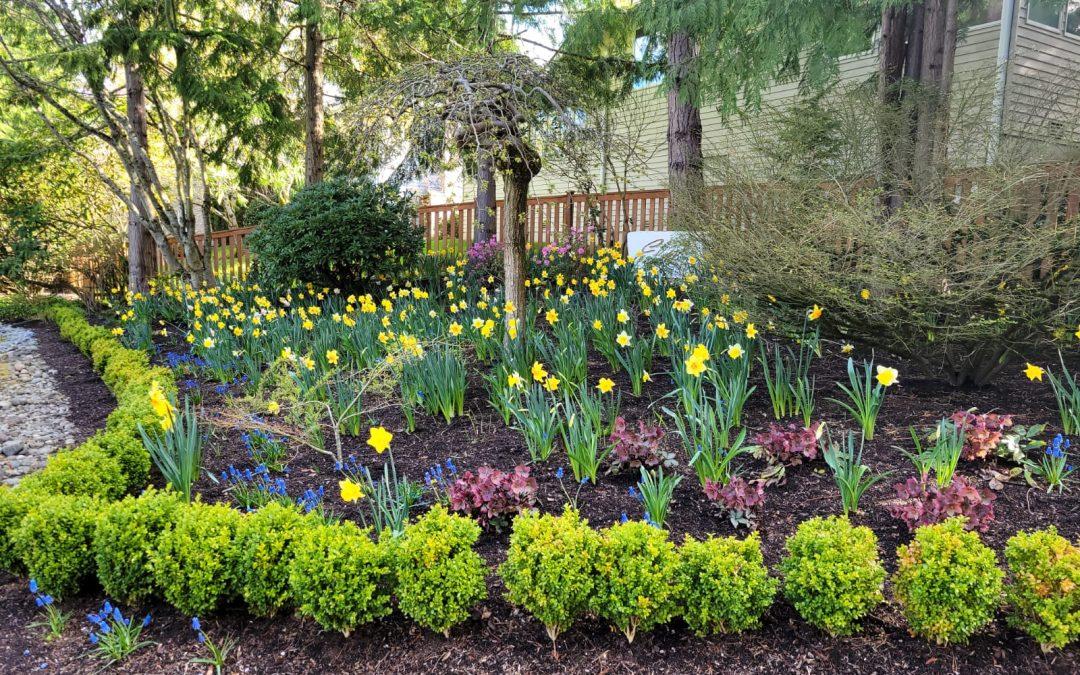
What’s your best defense against weeds that keep coming back, shrubs that look thinner each season, and mulch gone gray and flat? Professional landscape bed maintenance. It’s the key to beds that look great and keep your valuable plants healthy.
This guide breaks down what professional bed maintenance involves in the Pacific Northwest. There’s a science to it all, including mulching, how weed cycles work, why spring fertilization timing matters so much, and what rejuvenation pruning does that basic trimming cannot.
Each task connects to the others, so understanding the full picture is the first step toward a property that looks amazing all season long.
Leaf Management Means Clean Beds, Professional Appearance
Too many decomposing leaves left in beds through the winter look messy and create problems. A matted layer of wet debris traps excess moisture, blocks early spring growth, and harbors slugs, fungal spores, and overwintering pests.
In the Pacific Northwest, this is especially critical. Wet winters can turn leaf decomposition into a soggy, smothering layer that suffocates emerging perennials and ground covers before the season starts. Spring bed cleanup is more than aesthetics because it’s what allows mulch, fertilizer, and new growth to do their jobs.
First impressions of the season happen in spring. Debris-free beds show a property is being actively maintained.
Leaf Removal Is Part of Avid’s Standard Maintenance
Property owners shouldn’t be caught off guard by a debris removal charge after wintertime. At Avid, it’s part of our maintenance program and not tacked on as a line item.
Clients know what they’re getting every visit without having to micromanage scope or ask what’s covered. Professional maintenance means the details get handled on a schedule without having to be requested.
What About Eco-Friendly Flexibility?
Some of our clients prefer leaves left in low-visibility areas (back beds, wooded borders, naturalized zones). That’s a mindful, eco-conscious choice. Leaves breaking down in out-of-the-way areas function as organic mulch, and some clients are intentional about it for sustainability reasons. Others just prefer a more natural look in those spaces.
How Mulch Is the Foundation of a Healthy Planting Bed
Most homeowners see mulch as decoration only. In reality, mulch is doing three critical jobs around the clock in the Pacific Northwest’s heavy rain and mild temperatures. Let’s look at each one below.
Weed Suppression
A 2–4 inch layer of mulch blocks sunlight from reaching the soil surface. This cuts off weed seed germination before it starts. It reduces weed growth dramatically. That matters year-round in King and Snohomish County climates, which are ripe for aggressive weeds like bittercress, chickweed, and oxalis. Blocking germination means lower bed maintenance costs season over season.
Moisture Retention
Mulch reduces soil moisture loss by up to 60% by slowing evaporation and keeping root zones hydrated between rain showers. This is especially important during dry periods from July through September. Beyond battling drought conditions, mulch also protects against soil compaction during heavy winter rains, which can damage root structure and degrade soil health.
Visual Contrast
Dark mulch (black or deep brown) creates sharp visual contrast against green foliage and colorful blooms, making beds look professionally designed rather than just “filled in.” In our area, landscapes are dominated by lush deep greens like ferns, hostas, and rhododendrons. So dark mulch makes plant color pop rather than blend into the background. Fresh mulch also signals to visitors and tenants that the property is professionally maintained.
Weed Control: Not All PNW Weeds Are Created Equal
Not all weeds are the same, and treating them like they are is a common and costly mistake with bed maintenance. Annual weeds like crabgrass, chickweed, and bittercress live only one season. But there’s a catch. Before they die, they drop thousands of seeds into the soil, setting the stage for next season’s weeds.
Perennial weeds like dandelion, bindweed, and creeping buttercup are different. These come back from the root year after year. Pulling the top part of the weed does almost nothing. Creeping buttercup and horsetail are notorious for spreading aggressively.
Knowing the difference between perennial and annual weeds means the correct strategy can be used. For example, fighting annual weeds requires speed, while perennial weeds require persistence.
The “Seed Before It Spreads” Principle
A single annual weed can produce tens of thousands of seeds per plant. So, one missed weed can become next season’s infestation. Catching and stopping ten weeds early costs a few minutes. Letting them go to seed can cost many hours of extra labor.
Unfortunately, the PNW region’s long, mild growing season gives weeds multiple germination windows per year. There’s no real off-season for weed growth here, which means there isn’t a safe time period to let landscaped beds go unattended.
Why Proactive Maintenance Matters
Weeds shouldn’t be seen as a one-time problem. They’re a constant issue that needs consistent maintenance to keep them in check and avoid higher future costs. Think of it like skipping oil changes in a vehicle. It only leads to expensive repairs down the road.
Properties on a regular maintenance schedule see measurably cleaner flower beds over time compared to those that get reactive service. Proactive service interrupts weed cycles before they reset.
Since wet spring conditions in the Greater Seattle area accelerate germination, property owners who start proactive maintenance in late winter or early spring get ahead of the battle. And their tidy beds show it all season long.
Why Spring Is the Critical Window for Shrub Bed Fertilization
Shrubs come out of dormancy in early spring and begin pulling nutrients from the soil to fuel new growth and blooms. Fertilizing early (before soil temperatures rise enough for root activity) can cause nutrients to leach out before they’re absorbed. Being too late means the plant has already burned through reserve nutrients.
Area soil temperatures typically hit the fertilization sweet spot between late February and April. That window matters. Nutrients added to the soil now set the stage for the entire growing season and determine the following:
- Bloom quality
- Foliage color
- Overall plant vibrance through summer
Rhododendrons and Azaleas
Rhododendrons and azaleas are about as popular as plants get in the Pacific Northwest. They belong to a category called ericaceous plants (acid-lovers requiring lower soil pH to absorb nutrients properly). Our region’s naturally acidic soils give them a head start, which makes proper seasonal feeding even more vital.
These plants need fertilizers specifically formulated for acid-loving species. Standard fertilizers can lock out iron and manganese at the root level, leading to chlorosis — the telltale yellowing of leaves signaling the plant is starving even when fertilizer has been applied.
Timing matters too. Rhododendrons and azaleas should be fertilized as buds begin to swell, not after bloom, which puts extra stress on the plant.
Neglect Shows Up Fast
With ericaceous plants, nutrient deficiency becomes visible within a single season:
- Pale or yellowing foliage, especially when leaf veins stay green while surrounding tissue yellows, a clear sign of iron deficiency.
- Small or sparse blooms due to reduced energy.
- Buds drop as the plant sheds potential blooms before they open under stress.
Besides a lackluster look, neglected shrubs become increasingly vulnerable to disease, root stress, and pest pressure. A rhododendron that bloomed beautifully last year and looks sparse this year is almost always a nutrition or soil pH issue.
Consistent annual feeding is the difference between shrubs that are surviving and shrubs that are eye-catching.
What is Rejuvenation Pruning?
Rejuvenation pruning is a hard, intentional cutback designed to reset a shrub by removing old, woody, or overcrowded growth to force vigorous new growth from the base. It’s a strategic pruning meant to extend the life of a shrub and improve its long-term structure.
Without it, shrubs can get leggy, dense in the wrong places, and start producing fewer blooms on old wood. Think of it like clearing dead wood from a fireplace. You’re making room for something that can burn bright.
Current Seasonal Work: Spirea and Dogwoods
Two shrubs that respond impressively to rejuvenation pruning are spirea and ornamental dogwoods.
- Spirea should be cut hard before new growth emerges in late winter or early spring. This generates multiple fresh stems and more blooms than leaving old wood in place.
- Red-twig and yellow-twig dogwoods are a special case. The vivid stem color everyone loves only appears on new growth. Older stems fade to dull gray-brown. Cutting back hard in late winter is the only way to keep that signature color popping season after season.
Mild winters mean these cuts can happen earlier than most regions (late February into March is prime timing).
Contained Growth Now Means Less Work Later
Shrubs that get regular pruning don’t spread over walkways, crowd neighboring plants, or require emergency intervention. Skipping a season means more aggressive cuts next time, which stresses the plant and requires extra labor.
Regular resets also improve air circulation through the canopy. And this helps avoid conditions that invite fungal diseases.
Pruning Should Be Part of Standard Maintenance
At Avid Landscape, rejuvenation pruning is part of our professional landscape maintenance program, not an add-on that clients have to request or budget for separately.
Bundling this service into standard seasonal workflows helps ensure every aspect of your property is healthy and attractive, while avoiding surprise invoices.
Mulch Refresh vs. Routine Landscape Bed Maintenance
Routine maintenance keeps beds clean and plants healthy. A mulch refresh is a different service. It addresses the mulch layer itself as it breaks down over time.
Mulch naturally decomposes, compacts, fades in color, and loses functional depth each season. It needs to be replenished, not just tidied up. What looked fresh in the spring can be thin and much less effective by fall.
That’s why these are two distinct services:
- Landscape bed maintenance is recurring.
- Mulch refreshing is a seasonal add-on as it becomes necessary.
Why Annual or Bi-annual Mulch Refreshing Is Worth It
The correct mulch depth is 2–4 inches. Below that, weed suppression drops off sharply, and moisture retention suffers. Adding a fresh top layer of mulch restores the correct depth without full removal. This is efficient and cost-effective compared to letting beds deteriorate to the point of needing complete mulch replacement.
Mulch color fading is usually the thing homeowners and property managers notice first. Dark mulch that’s gone gray-brown signals neglect even when the bed plants are perfectly healthy. A fresh top layer of mulch instantly refreshes curb appeal and regains the “clearly maintained” impression.
Timing matters too:
- Annual mulch refresh in spring puts planting beds at their best as the growing season kicks off.
- Bi-annual refresh (spring and fall) is ideal for properties with high appearance standards or faster-than-average decomposition rates.
See Avid’s full mulch guide here.
Frequently Asked Questions: Landscape Bed Maintenance
Q: What’s included in commercial bed maintenance?
A solid bed maintenance program covers weed control, leaf removal, shrub fertilization, and rejuvenation pruning. Avid’s programs cover these specifics. Mulch refresh is the one exception since it’s a separate line item because material cost varies by property size.
Q: How often should landscape beds be serviced?
For most commercial properties, regular visits throughout the growing season keep beds looking sharp and prevent small problems (like weeds going to seed) from becoming expensive ones. Frequency depends on property size and plant density.
Q: Why does mulch matter so much?
Mulch does three jobs at once. It suppresses weeds, locks in soil moisture, and gives your beds that clean, professional contrast between dark ground cover and green plant material.
Q: What’s the difference between annual and perennial weeds?
Annual weeds live one season, but they spread seeds before they die. Perennial weeds come back from the root year after year. Catching both types early is far more cost-effective than dealing with an established weed population.
Q: What is rejuvenation pruning, and is it an extra charge?
This type of pruning is a harder cut-back on certain shrubs — like spirea and dogwoods — to force fresh, vigorous new growth. It keeps plants contained and reduces how much pruning they need later in the season. In most cases, this type of pruning is not an extra charge unless it is done as part of an initial cleanup.
Q: What happens to leaves and winter debris in the beds?
By early spring, beds should be fully cleared of winter debris as part of routine maintenance.
Q: Do azaleas and rhododendrons need special fertilization?
Yes, and spring is the window to do it. These plants have high nutritional demands. Skipping spring fertilization shows up quickly in weaker blooms and yellowing foliage.
Bed Maintenance Is More than a Checklist
As we mentioned, every element in this bed maintenance guide is connected.
- Debris removal is step one
- Mulch sets the new foundation
- Weed control interrupts problematic cycles
- Fertilization feeds desirable plants
- Pruning manages structure
The difference between a property that always looks sharp and one that looks “decent” is usually the consistency of the system managing it. Professional bed maintenance shouldn’t only be a list of checkmarks. It should be a system that keeps problems from getting a foothold.
Getting Your Beds Ready for Warm Weather
Avid works with property owners across King and Snohomish Counties to build maintenance programs around your specific property needs. We assess the condition of your beds, flag plants that need attention, and build a plan that fits your standards.