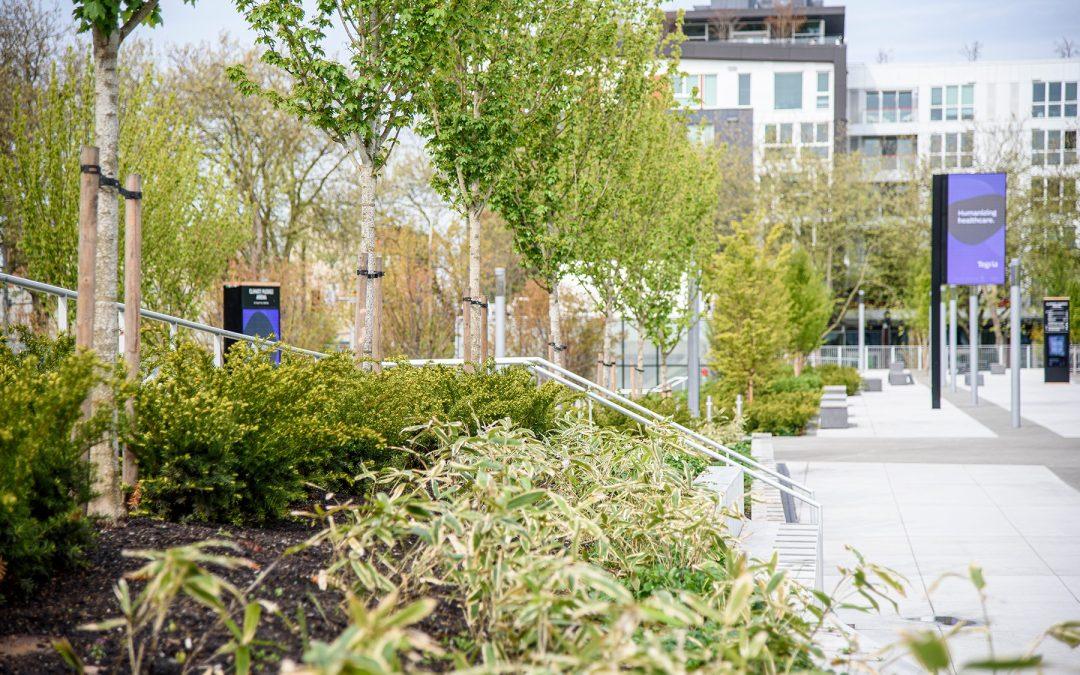
Every July, property managers across the Pacific Northwest look out at their commercial landscape and feel a familiar knot in the stomach. The turf is stressed. The beds look bad. Something is off. And the first instinct, almost every time, is to call the maintenance company and ask what’s going wrong.
Here’s the honest answer: by July, what’s going wrong has already been decided.
Summer doesn’t ruin commercial landscapes. Poor planning does. Ignored recommendations do. Wrong plants installed in the wrong places do. Summer just makes all of it visible. Summer, therefore, is the report card, not the problem.
If you want your commercial property to look great in the heat, the conversation you need to have starts in January.
The Compounding Effect of Seasonal Care
Great-looking summer landscapes are built in the off-season. That might sound counterintuitive, but every decision made in late winter and early spring either protects your landscape when heat arrives — or leaves it exposed.
Early-season mulching, for example, isn’t just about aesthetics. Applied at the right time, it moderates soil temperature, retains moisture, and reduces heat stress on root systems before summer ever shows up. Dormant pruning done properly over the winter sets plants up for healthier, more resilient growth heading into the warm season. And a thoughtful spring lawn renovation: aerating, overseeding, addressing problem areas before they compound, is the difference between turf that holds up under heat and turf that just surrenders.
None of this happens on its own. It happens because a property manager and their account manager are actually talking, walking the site together, and building a plan with the whole year in mind instead of just reacting to whatever crisis showed up this week.
The Problem Nobody Wants to Say Out Loud
Here’s something we’ve learned after years of maintaining commercial properties in the Pacific Northwest: maintenance cannot fix poor design.
Commercial landscapes are often planted to satisfy a city code at the time of installation including minimum sizes, minimum density, check the box and move on. Five years later, those plants have overgrown each other, they’re being sheared back to nothing season after season, and eventually they start dying. Then it looks bad, and the question becomes “why isn’t the maintenance company fixing this?”
Because there is nothing to fix. The problem was baked in from day one.
As Alex Ragusa, Avid’s Business Development Manager, puts it: “Sometimes the best route is to just leave it be, let it grow… it’ll save you money. Yes, it might look a little scraggly at times, but it’s going to develop better.” That kind of honest, horticultural advice isn’t what everyone wants to hear, but it’s the kind that actually serves your property over the long run.
The right plant in the right place isn’t a cliché. It’s the foundation that every future maintenance decision either builds on or works around. If the foundation is wrong, the best crew in the world is fighting an uphill battle every single season.

What Partnering With Your Account Manager Actually Looks Like
Every commercial property manager is juggling a lot. Landscape is one line item among dozens. We understand that. But the properties that consistently look the best year-round, through the cold and wet and heat and everything else the Pacific Northwest throws at them, all have one thing in common: their managers actually partner with their account manager instead of just approving invoices.
What does that look like in practice? It means scheduling a site walk and actually showing up to it. It means asking your account manager what they’re seeing on your property and what they’d recommend addressing before it becomes a bigger problem. It means, when they suggest mulching or a lawn renovation or a seasonal color refresh, that you take that recommendation seriously rather than deferring until next quarter.
“Rely on us,” Robert Boyker, Avid’s co-owner, says plainly. “Use us and our expertise as your partner and we will tailor the plan for you.”
Your account manager knows your site. They see what the community responds to, what the safety concerns are, where the drainage issues show up in a wet spring, and where heat stress hits hardest in August. That knowledge is only useful if there’s a real conversation around it.
Avid’s team holds ISA arborist certification, NALP certification, pesticide licensing, and brings an integrated pest management approach to every property. That level of expertise exists to serve your specific site, but only if you’re letting it. And for property managers thinking about how to budget meaningfully for their landscape, that partnership conversation is exactly where those discussions belong.
Where Summer Gets Real: Irrigation
If there’s one place summer separates well-managed properties from struggling ones, it’s water. Irrigation decisions made in spring (or never made at all) play out loudly in July and August.
Avid uses Weathermatic smart irrigation technology, and our irrigation evaluations go well beyond checking for broken heads. We’re looking at scheduling efficiency, coverage gaps, and site-specific needs and adjusting proactively before the heat window arrives.
It’s worth noting that Avid’s irrigation services are provided exclusively to clients within existing maintenance contracts that include irrigation scope. If you’re already a client, our team will proactively be there as the season turns. If you’re not, that’s a conversation worth having sooner rather than later.
Seasonal Color: The Detail That Changes Everything
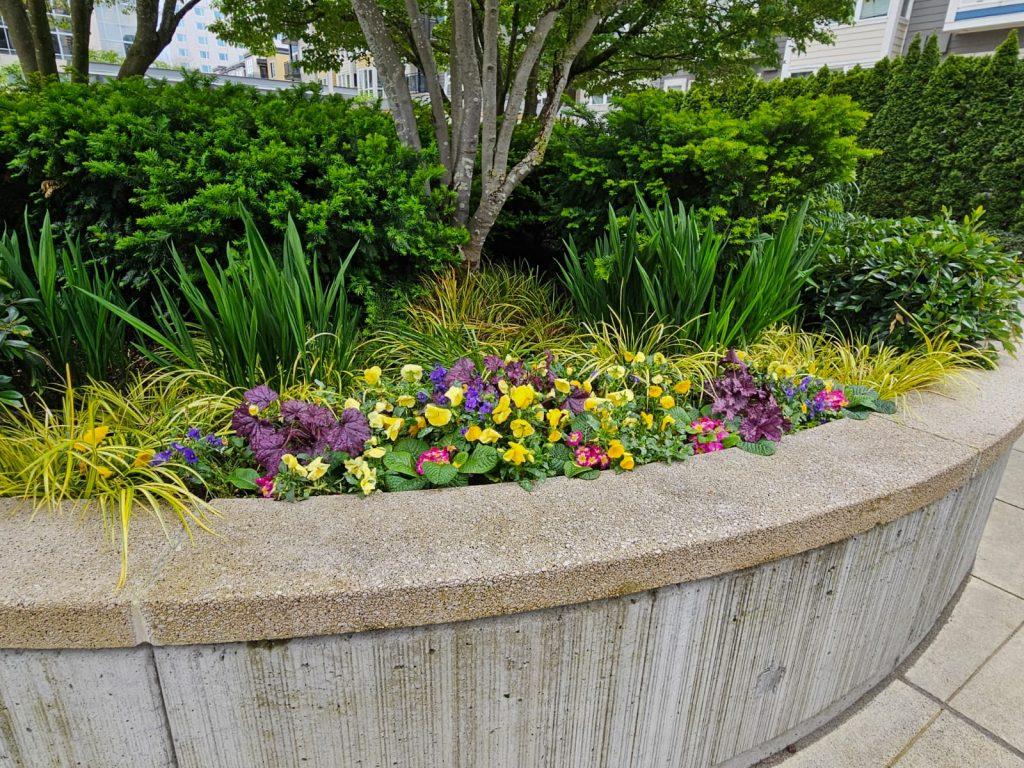
One thing that consistently impresses tenants, customers, and visitors is well-executed seasonal color. It’s also one of the most underutilized tools in commercial landscape management.
Alex sums up what he hears from property managers regularly: “Green is their main goal. The lawn and the plants need to look healthy. But, seasonal color is a ‘WOW factor’ that property managers LOVE to see.” Done right, seasonal plantings signal care and attention in a way that even a perfectly maintained turf line can’t fully replicate. It tells people something about the property before they even walk in the door.
The Bottom Line
If your commercial landscape struggles every summer, the question worth asking isn’t “what do I do about it now?” It’s “am I actually in a real partnership with my maintenance company, or am I just paying a bill and hoping for the best?”
We’re not out there just trying to keep the grass green. We’re trying to build landscapes that hold up through everything including a cold, wet Pacific Northwest winter; a saturated spring; and a hot, dry August that doesn’t forgive shortcuts taken in March. That takes a plan. And a plan takes a real conversation.
If you want to stay ahead of your landscape instead of chasing it, sign up for the Avid newsletter. Every issue is built around the same thing as this article: real horticultural knowledge, honest advice, and the kind of thinking that separates a well-managed commercial property from one that just gets by. It’s one of the ways we try to be more than a maintenance company. We’d rather you understand your landscape than just pay someone to manage it.