The short answer: yes, if your landscape provider actually knows what they’re doing
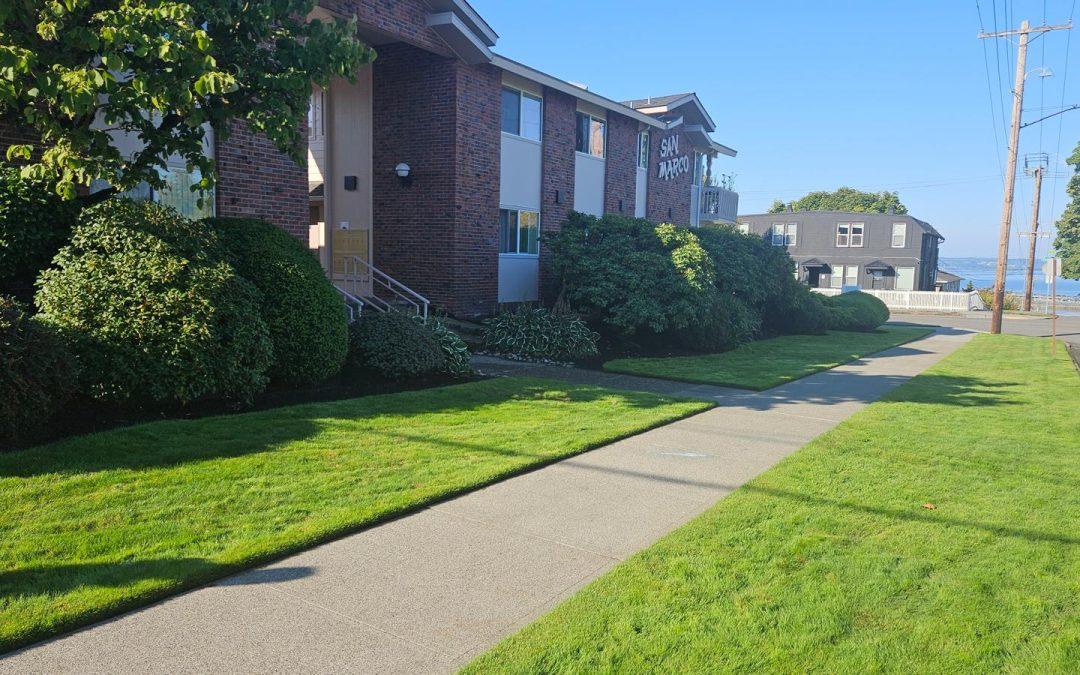
Organic and sustainable landscape maintenance is worth it for most HOAs, multifamily communities, and commercial properties in Western Washington. Done well, it protects long-term plant health, cuts water costs, reduces regulatory and liability risk, and delivers the kind of curb appeal that drives property values and resident retention.
Done poorly, or by a vendor who slapped “eco-friendly” on their website without changing their actual practices, it costs more and delivers less.
The rest of this article covers how to tell the difference, what organic landscaping really involves, and why the EcoPro Certified Sustainable Landscape Professional credential is the clearest signal a property manager can look for.
Why HOAs and property managers are moving to sustainable landscaping
A few things have changed in the last few years that are putting this question on more HOA board agendas and property management reviews.
- Water is no longer reliably abundant in the Pacific Northwest. Warmer, milder winters and drier soils are showing up in real ways. We’ve seen it anecdotally in cedar trees struggling across the region, and King and Snohomish County utilities are already planning for summer drought.
- Stormwater runoff regulations are tightening. Synthetic fertilizer and herbicide runoff into Puget Sound is a live issue tied to salmon recovery, and properties contributing to it face increasing scrutiny.
- Residents are paying attention. Notices about pesticide applications, off-gassing gas equipment, and chemical smells after treatments are generating complaints to HOA boards that didn’t exist a decade ago.
- Greenwashing is everywhere. Almost every landscape company now claims to be “green” or “sustainable.” Most of them have simply added the word to their marketing.
That last point is why certification matters. Anyone can say they’re sustainable. Very few can prove it.
What organic landscaping actually means
Sustainable landscape practice uses ecologically sound principles that work with the natural systems already on your property. The goal is pesticide-free management that produces healthy soil, healthy plants, and landscapes that get better over time instead of demanding more intervention each year.
What sustainable landscaping does not mean:
- Letting things grow wild
- Accepting weedy, unkempt-looking beds
- Skipping treatments and hoping for the best
- Using “natural” products as a marketing label while running the same underlying program
What it does mean:
- Treating the soil as a living system that feeds plants through biology
- Managing pests and weeds through prevention, observation, and targeted response
- Choosing equipment, materials, and suppliers based on long-term impact
- Measuring outcomes so program adjustments are evidence-based
What is EcoPro certification?
EcoPro Certified Sustainable Landscape Professional is a credential administered by the Washington State Nursery & Landscape Association (WSNLA) in partnership with the Washington Association of Landscape Professionals (WALP). It was developed specifically for the Pacific Northwest, with the goal of protecting local watersheds, groundwater, and public health.
To become EcoPro certified, a landscape professional has to:
- Complete a rigorous training program on sustainable landscape design and management
- Pass a certification exam
- Abide by the EcoPro Code of Conduct
- Demonstrate ongoing continuing education every three years
EcoPro is a credential tied to an individual professional, so a landscape firm can only legitimately claim EcoPro expertise when its actual people are certified. The logo alone means nothing if no one on the crew has passed the exam.
At Avid Landscape, our owners Will Bailey and Rob Boyker, our Senior Account Manager Grayson, and our Enhancement Manager Matt are all EcoPro-Certified. Avid was also an active participant on the program’s founding Advisory Committee, meaning our team helped shape the standards the rest of the industry is being measured against.
If you’re vetting a landscape vendor and sustainability is part of your decision, ask them how many EcoPros are on their team. The honest answer from most large regional competitors is zero.
Six sustainable landscaping practices that actually matter
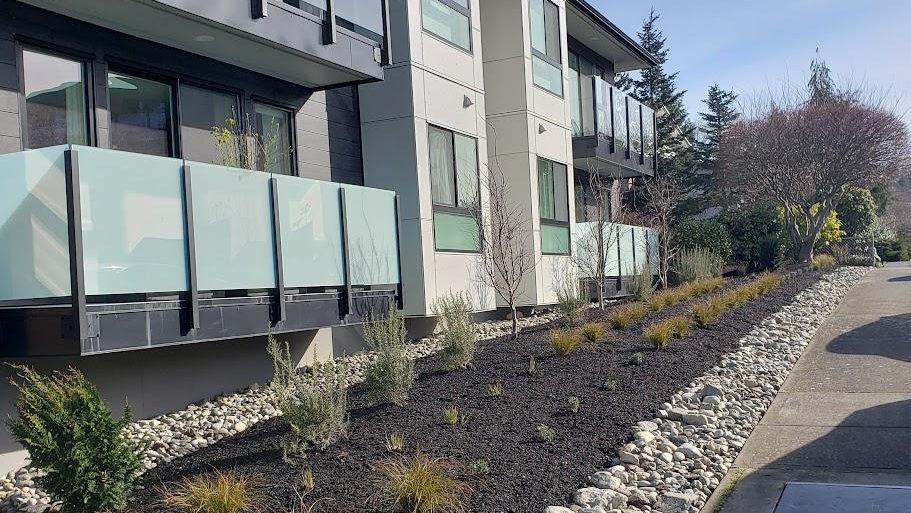
Here’s what sustainable landscape management looks like on a commercial or multifamily property, translated out of the industry jargon.
1. Soil first, everything else second
Healthy soil grows healthy plants that resist disease and pests on their own. We start every property with an annual soil test that tells us exactly what your soil needs. Most synthetic fertilizer programs over-apply nitrogen and phosphorus, which then runs off into waterways and degrades soil biology over time.
We use naturally derived organic fertilizers that release nutrients slowly, and we inoculate with beneficial soil fungi (mycorrhizae) that help plant roots access water and nutrients more efficiently. The result is soil that gets healthier every year. For more, see our Guide to Best Practices for Quality Landscape Bed Maintenance.
2. Pest and weed management without defaulting to chemicals
We use an approach called Integrated Pest Management (IPM), which is a fancy way of saying we observe first and spray last. Most landscape pest problems can be managed through cultural practices (proper pruning, airflow, plant spacing), mechanical controls (hand weeding, physical barriers), and biological controls (beneficial insects) before chemicals ever enter the conversation.
When intervention is needed, we select the least-toxic option that will actually work, and we target it precisely. We go deeper on this in our article on The Role of Integrated Pest Management in Commercial Landscaping
3. Water stewardship that matches the new PNW reality
A sustainable irrigation program starts with a full system evaluation every spring, continues with monitoring through the season, and ends with proper winterization. We adjust run times based on actual plant needs and weather conditions, and we flag leaks and inefficiencies before they show up on your water bill.
For properties with aging turf or oversized lawns, we also have honest conversations about lawn alternatives. Reduced-turf designs, native groundcovers, and meadow-style plantings can cut water use by 50% or more while keeping the property looking polished and intentional. We break down the regional trend toward this kind of design in our Top Sustainable Landscaping Trends for 2026 Pacific Northwest Guide.
4. Equipment and emissions that match the marketing
Two-cycle gas equipment (the kind most other landscape crews default to for blowers, trimmers, and edgers) is loud, polluting, and increasingly restricted in Washington jurisdictions. We use energy-efficient electric equipment wherever it’s practical, and we schedule routes to minimize drive time between properties. That last piece sounds small, but for a crew running six to ten stops a day, it adds up to meaningful fuel and emissions reductions over a season.
This is one of the places sustainability claims get tested quickly. A company that still runs a fleet of gas backpack blowers across every property is not operating a sustainable program, regardless of what their website says.
5. The right plants in the right places
A significant amount of the waste and chemical dependency in conventional landscaping traces back to plants that were never suited to the site in the first place. A sun-lover shoved into shade, or a species that needs dry feet installed in a wet clay pocket. These plants struggle, require more inputs to stay alive, and usually die within a few years anyway.
We specify native and site-adapted plants that evolved for Pacific Northwest conditions. They need less water once established, attract beneficial insects and pollinators, and create habitat that supports the broader ecosystem your property sits in. More on this approach in Right Plant Right Place: A Smarter Approach to Landscaping.
6. Mulch and bed care that build long-term value
Two to four inches of organic mulch over exposed soil suppresses weeds, conserves moisture, moderates soil temperature, and breaks down over time to feed the soil. It’s one of the highest-ROI practices in landscape maintenance, and done properly, it also looks sharp.
We apply mulch on a rotation appropriate to each property, keep it pulled back from plant bases to avoid the “volcano mulching” you see everywhere (which actually kills trees), and we use organic material.
Will an organic landscape still look good?
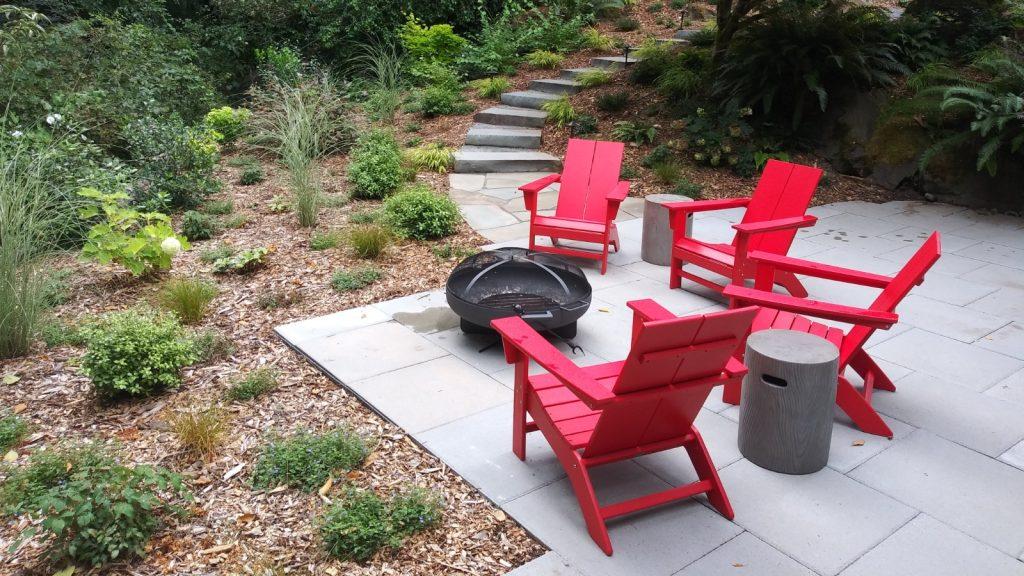
Yes, and usually better over time.
This is the first objection almost every property manager raises, and it’s a fair one. There’s a version of “organic” landscaping that looks overgrown, weedy, and obviously neglected. That version has nothing to do with what EcoPro certification produces.
Properties on a real sustainable program generally look better over a three-to-five-year window than properties on conventional programs, because the plants are actually healthy, the soil is actually alive, and problems are caught early. Curb appeal compounds when the landscape itself is getting stronger year over year.
The honest tradeoffs to expect:
- The first season after conversion can include some cosmetic unevenness as soil biology rebuilds and we identify which plants were being propped up by chemical inputs.
- Weeds are managed more slowly at first, because hand weeding, targeted spot treatment, and prevention take longer than a broadcast herbicide application.
- You’ll have fewer “perfectly green everywhere, all the time” moments and also far fewer dead zones, burned edges, and surprise replant bills.
Most of our clients find the tradeoff obviously worth it within a year.
How much does organic landscaping cost? Good, Better, Best service tiers
We offer three service tiers. We use the same organic products and EcoPro-aligned practices across all of them, so the difference between tiers comes down to what’s included.
- Good. Core sustainable maintenance: mowing, edging, seasonal pruning, basic bed care, and irrigation monitoring. A strong foundation for properties with tight budgets.
- Better. Everything in Good, plus quarterly irrigation inspections and a deeper seasonal enhancement program. This is the tier most of our clients are on, and the one we’d recommend for most HOAs and commercial properties.
- Best. Everything in Better, plus annual lawn renovation, scheduled mulch rotation, and an annual soil test with customized nutrient management. This is the full-service tier, with no surprise bids and no nickel-and-diming for the standard enhancements every property needs anyway.
Pricing is property-specific and based on an on-site walkthrough. We don’t quote landscape maintenance from a satellite photo.
The ROI of organic landscaping for HOAs
When we sit with HOA boards, the cost conversation usually gets reframed once the full picture is on the table. Beyond the monthly contract number, here’s what sustainable landscaping typically delivers for a multifamily or HOA property.
- Lower long-term plant replacement costs. Healthy plants don’t die and need to be replaced every few years. Replant spend is one of the largest hidden line items in conventional programs.
- Reduced water bills. Especially on properties where we’ve been able to right-size irrigation and incorporate lawn alternatives.
- Fewer resident complaints. No pesticide notices posted on doors, no chemical smells after treatments, and no safety questions about kids and pets on treated turf.
- Property value support. Buyers and tenants in Western Washington increasingly care about sustainability, and properties that can demonstrate it have a real market advantage.
- Regulatory future-proofing. As stormwater and pesticide rules continue to tighten across King, Snohomish, and Pierce counties, properties already operating sustainable programs won’t be scrambling to catch up.
Schedule a sustainable landscape walkthrough
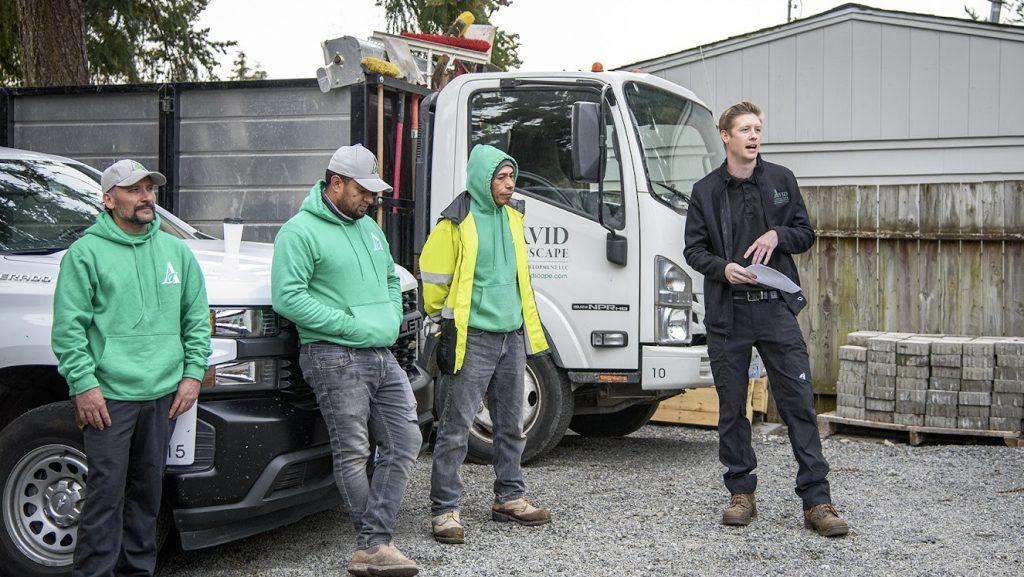
We offer on-site walkthroughs for HOA boards, property managers, and commercial owners who are considering a switch. A walkthrough takes about 45 minutes and includes:
- A candid assessment of your current landscape’s health, stress points, and opportunities
- A review of your current program against EcoPro sustainable standards
- A clear outline of what conversion to a sustainable program would look like on your property, including what changes immediately, what phases in, and what the realistic first-year look will be
- A transparent conversation about pricing and service tiers
No pressure, no sales pitch. If sustainable landscaping isn’t the right fit for your property right now, we’ll tell you that honestly.
Avid Landscape is a locally owned commercial landscape management and residential design-build firm serving Western Washington, including Seattle, Bellevue, Bothell, Redmond, Mercer Island, and surrounding communities. Our team includes multiple EcoPro Certified Sustainable Landscape Professionals, and we were active participants in the EcoPro program’s founding Advisory Committee. This article is part of our ongoing series on what Committed means at Avid, one of our four brand pillars alongside Local, Accountable, and Professional.