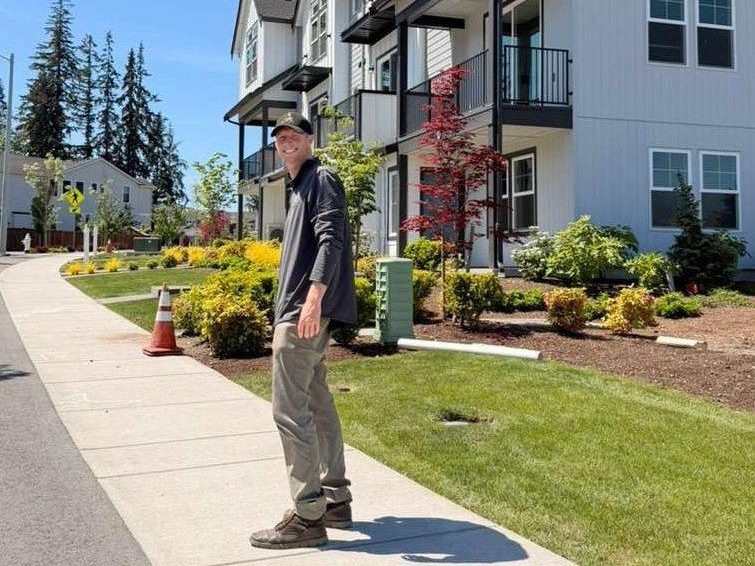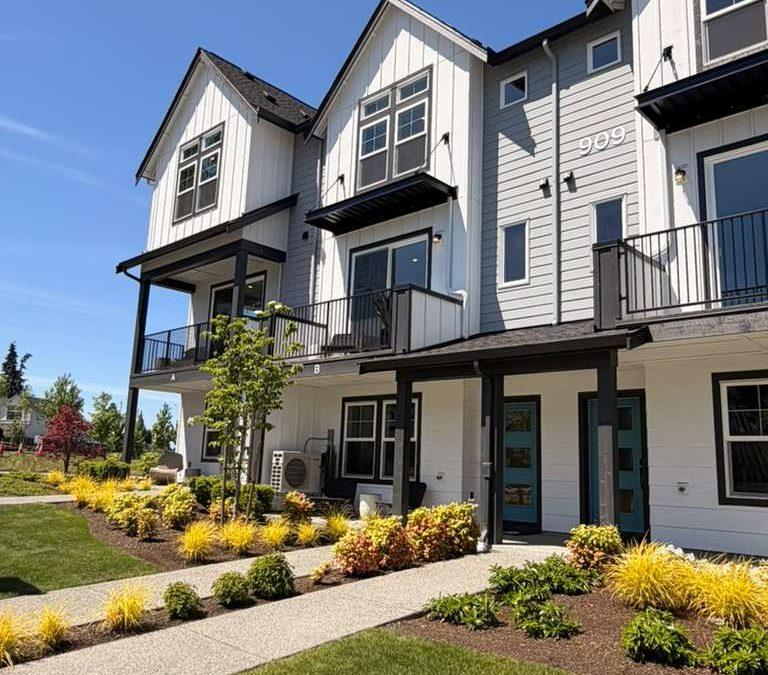
This April, Avid activated commercial irrigation systems weeks earlier than usual. In 35 years of working in Western Washington landscapes, our team has never had to turn irrigation on this early in the season.
That early start tracks with the year Washington is having. On April 8, 2026, the state declared a statewide drought emergency, the fourth consecutive year of drought declarations. Statewide snowpack ended the season at roughly 50% of normal, with much of winter’s precipitation falling as rain rather than snow. Seattle Public Utilities is not requiring mandatory restrictions this summer, having refilled mountain reservoirs early as a hedge, but SPU and Cascade Water Alliance are both requesting voluntary conservation. The broader signal is unmistakable: Western Washington’s water picture is changing, and commercial properties need to change with it.
Avid Landscape is a founding member of the Advisory Committee for EcoPro, Washington’s sustainable landscaping certification program. That orientation shapes how we approach summer commercial care. Here’s what your property should be focused on this season.
How Should Commercial Properties Water During a Pacific Northwest Drought Year?
This is where the biggest wins are. Most commercial irrigation systems were designed for a climate we no longer have, and small operational changes can cut water use significantly without compromising plant health.
Separate turf from trees and shrubs.
Lawns and trees have very different water needs, and watering them together often results in overwatering one to keep the other alive. Trees and mature shrubs typically need infrequent, deep soaks. Turf needs more regular but shorter watering. When they share an irrigation zone, you end up wasting water on whichever plant needs less.
A lot of water gets wasted in commercial landscapes irrigating established plant material that does not need much, if anything. Mature trees and established shrub beds often need far less supplemental water than property managers assume, especially in shaded areas.
Water deep, water less often.
Short, frequent watering encourages shallow roots and weak plants. Deep, infrequent watering pushes roots down where soil holds moisture longer, which builds drought resilience over time. For most established landscapes, that means watering two or three times a week rather than every day, with run times long enough to soak six to eight inches into the soil.
Use cycle and soak on slopes and clay soils.
Cycle and soak is a programming technique where instead of running a zone for one long stretch, you split the run time into shorter cycles with rest periods between them. The rest periods let water actually absorb into the soil rather than running off into hardscape or storm drains. On sloped commercial properties or sites with heavy clay, this can be the difference between irrigating the landscape and irrigating Puget Sound.
Upgrade spray nozzles to MP rotators.
Traditional spray nozzles put out water faster than most soils can absorb it. MP rotators (multi-stream rotating nozzles) deliver water more slowly and evenly, using about 30% less water than standard sprays, according to manufacturer testing. We retrofit MP rotators on commercial sites as part of our Weathermatic smart irrigation upgrades, and the water savings show up in client bills within the first season.
Convert spray zones in beds to drip.
Spray irrigation in planted beds wastes water to evaporation and overspray. Drip irrigation delivers water directly at the root zone, which uses dramatically less water and reduces fungal disease pressure on foliage.
Be honest about lawn footprint.
This is a harder conversation. Lawns are the thirstiest part of any commercial landscape, and many properties have more turf than they actually need or use. Reducing lawn footprint, especially in low-traffic or hard-to-irrigate areas, is one of the most effective water-conservation moves available. The tradeoff is evident: a uniform green expanse has aesthetic value that many HOAs prize, and replacement plantings take a season or two to mature. We aren’t suggesting every commercial property tear out its lawns. The lawn-everywhere default just deserves a fresh look, especially in marginal areas where the turf is already struggling.
For a deeper look at how we approach summer irrigation specifically, see How Avid’s Summer Irrigation Evaluations Go Beyond the Industry Standard.
When Should Commercial Trees Be Pruned for Safety and Clearance?
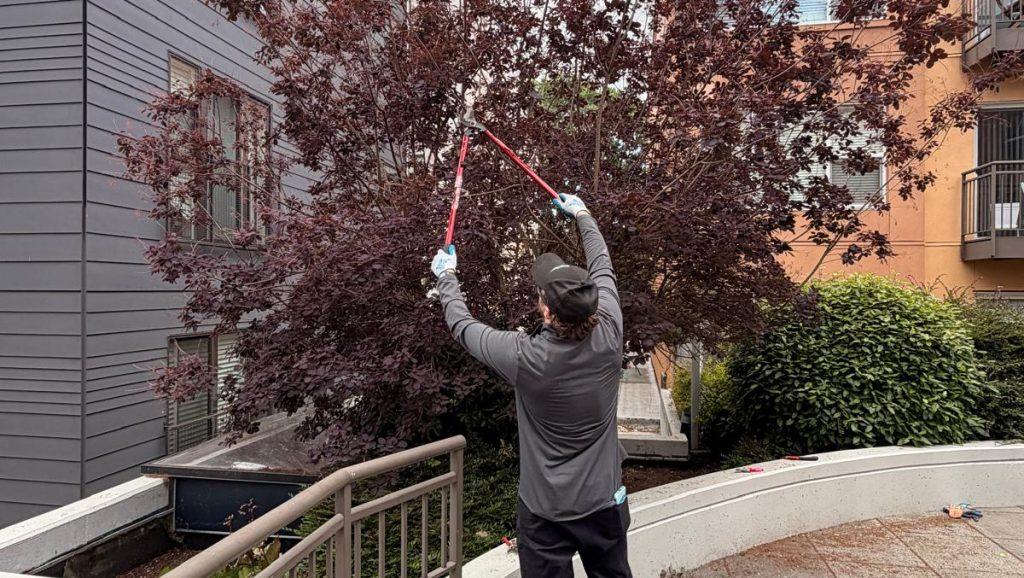
Summer is the right time to look at your trees for two reasons. First, the foliage is out, which means dead, dying, or diseased limbs are easy to spot against the healthy canopy. In winter, when everything looks bare, you genuinely cannot tell what is dead and what is dormant. Second, summer storms and high winds can turn weak limbs into falling-limb liability claims fast.
The arboriculture term for this work is crown cleaning: the selective removal of dead, dying, diseased, and broken limbs from a tree’s canopy. It’s the lowest-risk, highest-value pruning a commercial property can invest in.
The clearance specs that matter for liability. Seattle’s standard, set by SDOT, is 8 feet of clearance over sidewalks and 14 feet of clearance over roadways. Most other Western Washington cities follow similar standards. A delivery truck clipping a low branch, a low-hanging limb forcing pedestrians off an ADA-compliant pathway, or a dead limb hanging over a parking area is more than a maintenance issue. That’s liability exposure that gets very expensive when something goes wrong.
We treat clearance pruning and crown cleaning as a paired summer service for commercial accounts. Together with dormant-season structural pruning in winter, these make up the full pruning program for commercial trees. Winter is when bare branches reveal a tree’s architecture, letting us shape for long-term health, balance, and growth. We covered that side of the program in Dormant Pruning: How Avid Landscape Keeps Your Plants Healthy and Beautiful Through Winter.
Why Doesn’t Avid Recommend Preventative Pest Sprays?
This is one of our clearest stances, and it sometimes surprises new clients. Avid does not recommend preventative insecticide programs or “plant health care” spray packages for Pacific Northwest commercial landscapes. We rarely treat at all.
The reasoning has three parts.
- The PNW has relatively few pest problems that warrant chemical treatment. Yes, we have aphids on roses, tent caterpillars in spring, root weevils chewing rhododendrons, and slugs in beds. These are real. But, most of them are cosmetic, cyclical, or solvable through other means. The catastrophic pest pressures that drive preventative spray programs in other climates do not really exist here. EcoPro’s guidance reflects this.
- When a plant keeps having problems, replacement beats treatment. If a tree or shrub has persistent insect issues year after year, the plant is usually in the wrong place: wrong soil, wrong light, wrong exposure, or wrong species for the site. Pumping it full of chemicals every season treats the symptom and creates new problems (runoff into Puget Sound, harm to pollinators and beneficial insects, costs that compound). Replacing it with the right plant in the right place solves the root issue. We wrote more about this philosophy in Right Plant, Right Place: A Smarter Approach to Commercial Landscaping.
- Targeted treatment has its place. We aren’t absolutist about this. There are cases where targeted treatment is the right call: a specific pest outbreak threatening a high-value specimen tree, a documented infestation that monitoring confirms is escalating, an invasive species that demands intervention. Integrated pest management (IPM) is our framework for those decisions. Our deeper dive on this lives at The Role of Integrated Pest Management in Commercial Landscaping.
What this means for your property: lower chemical inputs, cleaner runoff, healthier beneficial insect populations, and a landscape that’s diagnosed before it’s treated.
How Does Mowing Change in the Summer for Cool-Season Commercial Lawns?
Western Washington’s commercial lawns are almost entirely cool-season grasses (perennial ryegrass, fine fescue, Kentucky bluegrass blends). These grasses are biologically programmed to slow down during summer heat, and trying to push them through that period like it’s spring causes damage.
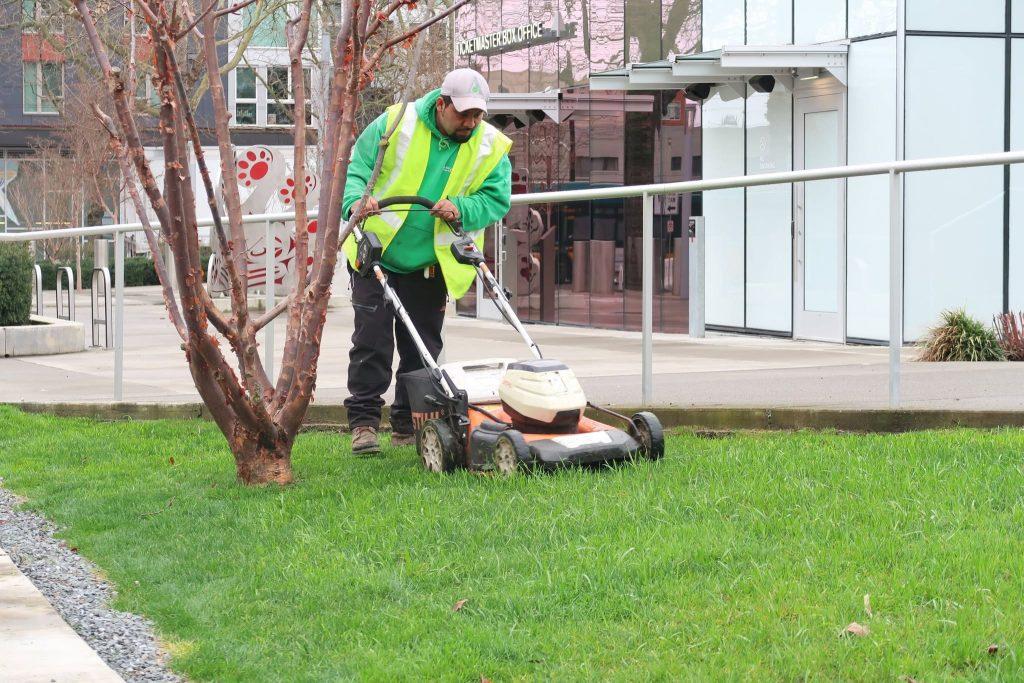
Mow higher. Raise the mowing height to 3 to 4 inches during summer. Taller grass shades its own root zone, holds moisture longer, and outcompetes weeds. Scalping in summer stresses the lawn and accelerates browning. Avid uses electric mowing equipment on commercial accounts, which delivers a cleaner cut at these heights and reduces emissions and noise on your property.
Expect slower growth, especially in August. Cool-season grasses essentially go dormant in the hottest weeks of the year, typically mid-July through late August. We reduce mowing frequency during this window automatically on Avid commercial accounts. There’s no contract conversation needed. It’s just how we service properties responsibly. Mowing dormant grass on a fixed weekly schedule wastes time, wastes fuel, and damages turf when there’s nothing to cut.
Brown lawns are dormant, not dying. This is worth saying directly, because it’s the single most common emergency call we get in late summer. Crispy, golden-brown turf in August is doing exactly what cool-season grass is supposed to do in a drought year. Unless the browning is patchy and irregular (which usually indicates fungal disease or irrigation failure), it will green up again when temperatures drop and rainfall returns in fall. Resisting the urge to dump extra water on a dormant lawn is the right move for the lawn and the watershed.
What Are the Top Summer Landscape Maintenance Priorities for Commercial Properties in Western Washington?
Three things to focus on this season:
- Water smarter, not more. The drought is not going away. Properties that adapt now will pay less, look better, and avoid future restriction headaches.
- Prune for safety and liability. Crown cleaning and clearance pruning are summer’s highest-value tree work for commercial accounts.
- Trust the landscape’s biology. Brown lawns, fewer pest treatments, and less frequent mowing in August reflect responsible care for the Pacific Northwest climate we actually have.
If you’d like an honest assessment of how your commercial property is set up for summer (and where the water savings, safety wins, and longer-term improvements are hiding), schedule a walkthrough. It’s the most useful 30 minutes you’ll spend on your landscape this year.